At the heart of Kenya’s agribusiness transformation lies Exotic EPZ Ltd, a women-led enterprise making waves in the macadamia nut export industry. Based in Kenya and run by two experienced women entrepreneurs, Jane Maigua and Charity Ndegwa, Exotic EPZ is redefining value addition and climate resilience by promoting Macadamia nut tree as a carbon sequester and inclusive economic growth through access to market for the smallholder farmers from 13 macadamia growing counties in Kenya.
A Sustainable Value Chain from Farm to Export
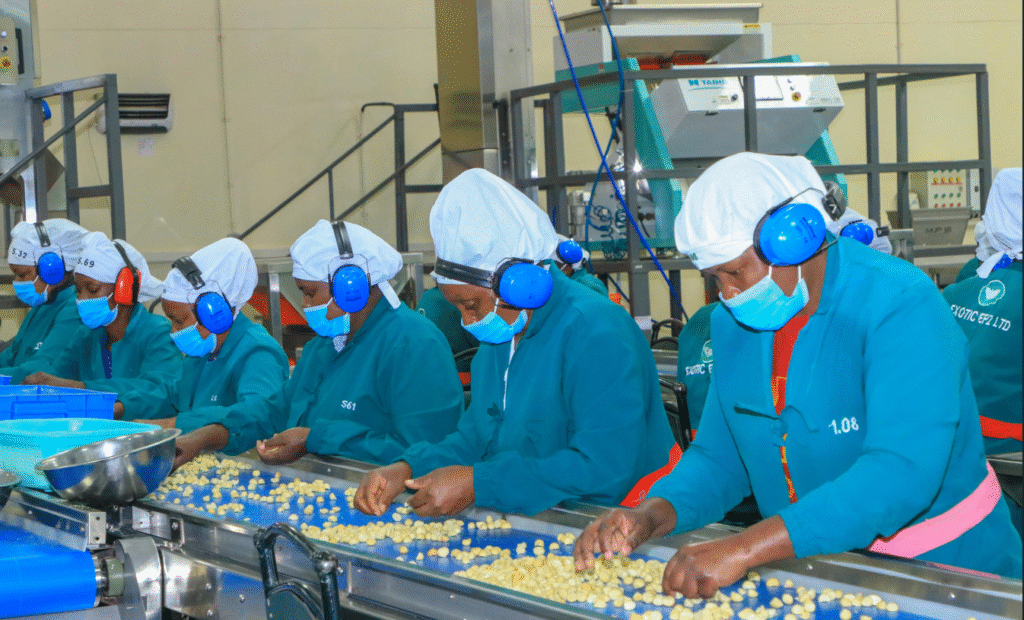
Exotic EPZ works closely with smallholder farmers across Kenya to source raw macadamia nuts, which it processes under globally recognized food safety standards. By focusing on local value addition, the company not only improves farmer incomes but also retains export earnings within the country. The enterprise’s approach aligns closely with Kenya Climate Ventures’ strategy to support businesses that strengthen climate-smart agricultural value chains and foster inclusive economic growth.
Women at the helm of Change
The company is going against the odds of social exclusion and inadequate support of women, entrenched masculinity that has often stifled entrepreneurial culture in women. One of the company’s strongest differentiators is its women ownership and leadership. With women at the forefront of strategy, operations and growth, Exotic EPZ serves as a prime example of how women leadership drives sustainable business and employment, and a validation that investing in women founders creates growth and stability in markets.
The KCV gender lens investment strategy applies the 2x Global criteria in the origination, review, and investment decisions. 55% of KCV investment portfolio are women – owned/ led enterprises compared to 2X threshold of 30%.
Beyond Nuts: Delivering Impact
Exotic EPZ’s model goes far beyond commercial profitability. It is deeply rooted in social and environmental impact. The company plays a vital role in creating sustainable and decent employment opportunities, particularly in rural communities where job prospects are often limited. To date, the business has created and sustained 159 jobs, 118 of which are held by women, demonstrating a strong commitment to gender inclusion and economic empowerment. Furthermore, 2,320 female-headed households are among those directly benefiting from the business, either through employment or supply chain participation. As a buyer of raw macadamia nuts, Exotic EPZ supports 7,664 rural households who supply these materials, contributing to improved livelihoods and economic resilience across farming communities in Kenya. By processing macadamia nuts locally, and being part of the leadership of a National advocacy campaign that ensures value addition remains in Kenya, so as to not only uplift local economies but also enhance skills and income stability for workers.
On the environmental front, the company’s operations play a role in climate mitigation, with macadamia trees sequestering approximately 13 pounds of CO₂ per tree annually. With contracts secured across the international market, Exotic EPZ is positioning itself as a leading processor driving both climate action and rural development in Kenya increasing agricultural sector value in contributing to the GDP growth.
In line with global sustainability goals, Exotic EPZ champions responsible consumption and production by adhering to internationally recognized food safety standards and minimizing waste throughout its processing chain. Its adoption of solar energy for its processing facilities reflects a strong commitment to climate action, reducing reliance on fossil fuels and lowering its overall carbon footprint.
Moreover, the company’s inclusive sourcing model, which ensures fair compensation to smallholder farmers, is a direct intervention in the fight against poverty. By offering reliable market access and consistent income streams, Exotic EPZ helps farming households build resilience and long-term financial security. These outcomes contribute directly to Sustainable Development Goals (SDGs) 1, 5, 8, 12, and 13, hence resonating with KCV’s vision of climate resilient communities and markets.
Written by Lucy Ndumi