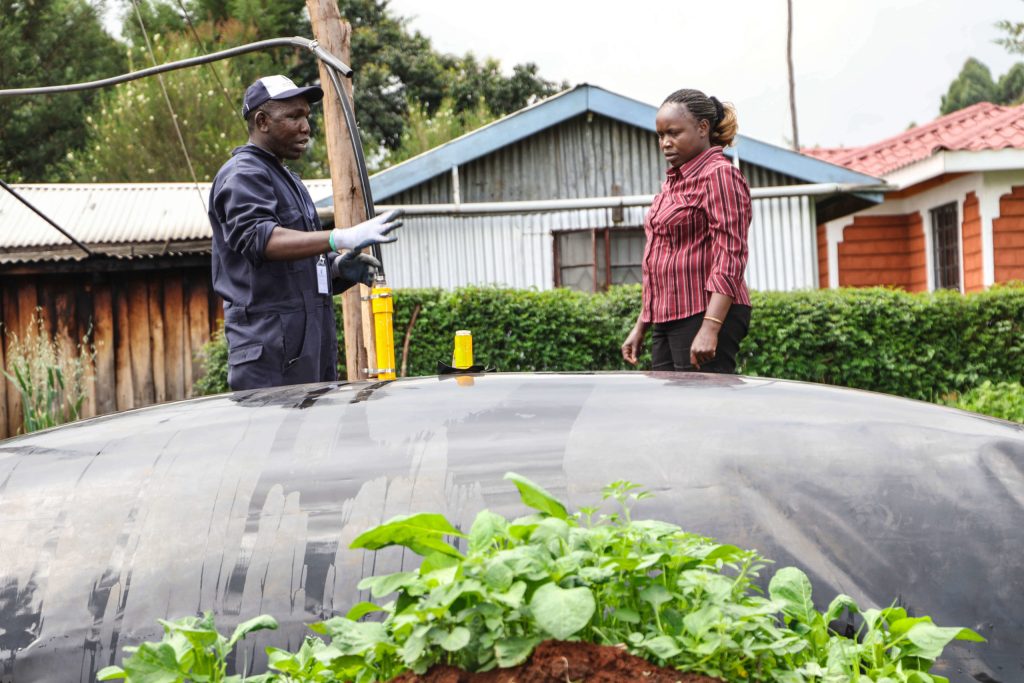
Agricultural waste is turning into a major economic and environmental problem throughout Kenya. Each year, thousands of tons of sugarcane bagasse are produced in sugar-producing areas like Western Kenya. A large portion of this waste is either burned or allowed to decay on open areas. This is a major factor in the deterioration of the ecosystem. Unmanaged garbage poses disposal problems for factories and nearby towns, while open burning releases dangerous greenhouse gasses and air pollutants into the environment. However, institutions all over Kenya still rely on firewood and other traditional biomass fuels for heating and cooking, which exacerbates indoor air pollution, accelerates deforestation and raises operating expenses. The dilemma is evident: Kenya is dealing with issues of both energy poverty and agricultural waste.
Agricultural waste is an untapped energy asset
What if the fields where the problem originates also hold the key to solving both challenges? Agricultural byproducts are becoming more widely acknowledged as valuable energy resources rather than waste as the world moves toward a circular economy. When properly handled, sugarcane bagasse can be transformed into clean, energy-efficient fuel alternatives like briquettes. This realization is changing how companies and organizations view waste; not as something to discard, but as a chance to add value, cut emissions and improve local energy systems.
Acacia Innovations Limited: Turning waste into clean energy
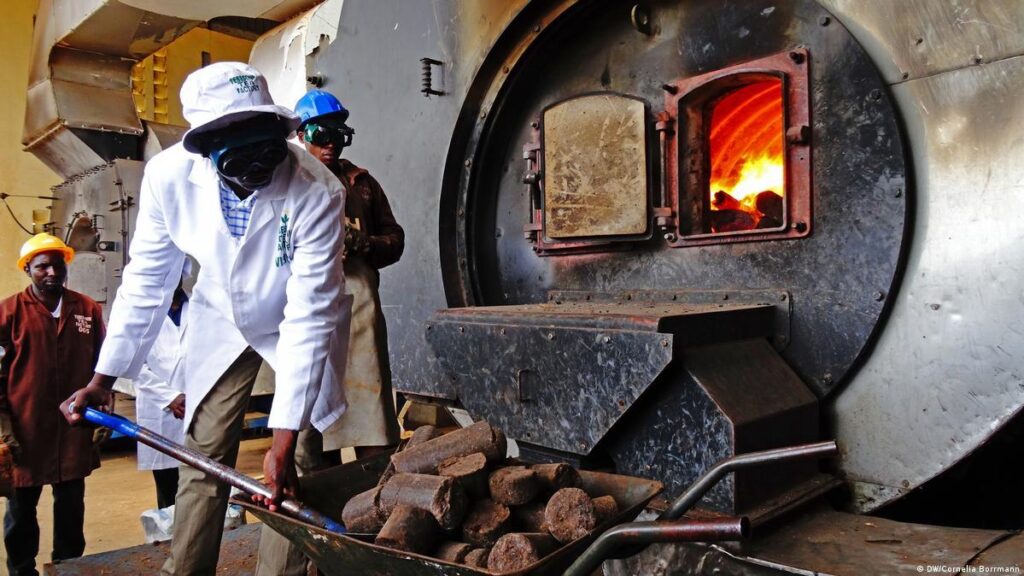
Acacia Innovations, one of the enterprises supported by Kenya Climate Ventures,located in Bungoma, is providing a practical solution to this challenge. The company collects agricultural waste(bagasse) and transform it into Kuni Safi, a non carbonized eco-friendly briquette designed for institutional and industrial clientele. Unlike traditional firewood or charcoal, Kuni Safi briquettes produce steady, dependable heat for large-scale cooking and industrial operations while burning cleaner and emitting substantially less emissions. By replacing firewood, they help reduce pressure on forests and contribute to the fight against deforestation. They also offer institutions a more cost-effective energy alternative over time, lowering operational expenses while creating a safer and healthier working environment. With this invention, Acacia is proving that circularity is a scalable, industrial-grade business solution that can tackle both environmental and financial issues, rather than only a catchphrase for sustainability.
Proof of impact: Data driving adoption
The effects of Acacia are already apparent on the ground. Thus far, 137 institutions were successfully switched to energy-efficient briquettes, over 36,887 tonnes of agricultural waste were recycled and decreased CO2 emissions by more than 1,055 tons. These establishments include hotels, restaurants, schools, hospitals and small and medium-sized businesses (SMEs), many of whom are seeking affordable and sustainable alterrnatives to traditional fuels.Acacia is also embracing the increasing need for quantifiable, transparent sustainability data by aligning with frameworks like the Global Circularity Protocol, which is a crucial component in luring partners and investors that are concerned about climate change.
The National Push for Clean Cooking by 2028
Kenya’s policy environment is making solutions like Acacia’s even more relevant. The National Cooking Transition Strategy (2024–2028) is a topic of increasing discussion in Kenya. By 2028, the government wants everyone to have access to clean cooking, with a focus on moving public institutions away from traditional biomass fuel. The “time-dividend”, the realization that moving to clean solutions saves households and institutions an average of 790 hours annually, is a fundamental component of this approach. The policy encourages adoption of alternative clean fuels, investment in energy-efficient cooking technologies, transition of public institutions away from inefficient biomass systems and reduction of time spent sourcing and managing fuel. This means clean cooking is no longer just an environmental issue. It is an economic and productivity issue as well.
Circularity as an “Industrial Resilience” Strategy
Economic security has taken precedence over environmental conservation in the global discourse. Leaders have stressed that circularity is now a “boardroom strategy” to shield companies from supply chain shocks at recent international events. For Acacia Innovations, this means that providing briquettes isn’t just about being “green”; it’s about offering Kenyan schools, hospitals, restaurants, industries and hotels a stable, locally-sourced energy supply. By using “Kuni Safi” eco-friendly briquettes, these institutions are no longer vulnerable to the price volatility of imported fuels or the increasing scarcity of traditional firewood.
Why the Industrial Sector is Switching
Rising operating expenses and the need for corporate responsibility provide two challenges for large-scale energy consumers. Acacia takes care of both. Kuni Safi briquettes emit fewer emissions while providing a steady heat production that frequently surpasses that of conventional wood. The change offers substantial operational savings for SMEs and a safer working environment for employees in commercial kitchens.
A Blueprint for the Future
Acacia Innovations is a compelling case study that serves as a reminder that the shift to clean energy doesn’t always call for cutting-edge technology; occasionally, it only calls for innovative use of what we currently have. Acacia is demonstrating how circular innovation drives our companies and demonstrates that the future of energy is regenerative by turning sugarcane waste into a “Kuni Safi” reality.