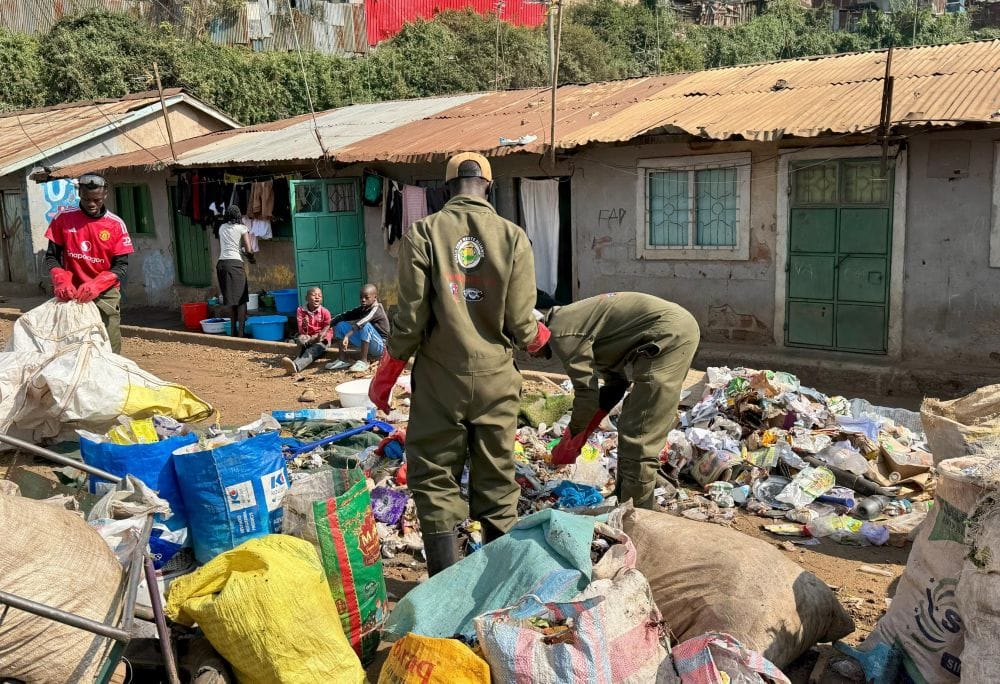
From Waste to Wealth: How Kenya Climate Ventures’ Portfolio Is Delivering Measurable Progress on SDG 12.3 This Zero Waste Day
The United Nations Environment Programme (UNEP) states that superior resource efficiency, rather than just financial capital, is increasingly what drives a green company to become a market leader in the global climate-smart corporate environment. Food waste, one of our most urgent structural shortcomings appropriately takes center stage as a crucial obstacle to this efficiency as we commemorate the International Day of Zero Waste 2026.
A clear call to action has been made by UN-Habitat and the United Nations Environment Programme (UNEP): reduce food waste worldwide by half by 2030. By doing this, annual economic losses of up to $1 trillion might be avoided, leaving a huge gap that circular economy technologies could fill.
This mission is anchored in Sustainable Development Goal 12 (Target 12.3), which explicitly aims to halve per capita global food waste at the retail and consumer levels and reduce food losses along production and supply chains by 2030. Achieving this target is not just an environmental necessity; it is a blueprint for building resilient, resource-efficient economies that prioritize long-term value over short-term consumption.
Based on the What a Waste 3.0 report, Sub-Saharan Africa is currently the world’s fastest-growing waste producer, with organic and food waste dominating its waste streams. As of 2022, the region faced a critical infrastructure gap, with only 7% of municipal solid waste managed in controlled facilities, leading to widespread open dumping and significant methane emissions This problem is expected to worsen quickly; by 2050, the region’s total trash creation is expected to increase by 124% due to urbanization and population development.
At Kenya Climate Ventures, we recognize that scaling a sustainable business requires navigating a complex path toward capital efficiency and market stability. We provide the “catalytic capital” and technical assistance necessary to turn these environmental challenges into commercial successes.
A Zero Waste strategy is the most rigorous route to financial sustainability, as our portfolio firms are currently demonstrating:
Taimba Limited: Eliminating Post-Harvest Loss
At the center of the circular economy is Taimba. Rural smallholder farmers are directly connected to metropolitan traders and educational institutions through their B2B mobile-based e-commerce platform. Taimba directly lowers the “food loss” that usually happens during conventional, multi-layered distribution by optimizing the supply. By “designing out” waste from the system, fresh product is guaranteed to reach consumers more quickly and at a lower cost. Beyond supply chain efficiency, Taimba Limited actively supports industrial symbiosis. In particular, 27 tons of organic waste produced by Taimba Limited were diverted from disposal and supplied to another company for the production of biofuel, directly supporting circularity and lowering potential landfill emissions while incorporating farmers into a more dependable and profitable value chain.
Kings Biofuels Limited: Transforming Agricultural residuals
Kings Biofuels manufactures environmentally friendly briquettes from bio-waste resources including sawdust, coffee husks and maize cobs. They provide a sustainable substitute for fossil fuels while reducing climate change by turning agricultural waste into clean energy source.
With 1,024 tons of waste recycled and a noteworthy 11,326 tons of CO2 emissions reduced thus far, the impact is enormous. Additionally, the company has broadened its scope to guarantee that 26 institutions and industries now have direct access to energy-efficient briquettes, proving that agricultural waste can be a primary driver for industrial decarbonization.
Acacia Innovations: Scaling Industrial Energy Efficiency through Circularity
Acacia Innovations is expanding the circular economy’s reach in the clean energy sector by manufacturing, branding and distributing “Kuni Safi” eco-friendly and non-carbonized briquettes derived from sugarcane waste to hotels, schools and small and medium-sized businesses. Acacia tackles the environmental necessity of forest conservation as well as the industrial requirement for inexpensive energy. With 36,887 tons of waste recycled and 1,055 tons of CO2e reduced, the company’s overall impact is evidence of the scalability of waste-to-energy solutions. Acacia is showcasing how circular innovation offers a rigorous path to environmental sustainability and operational savings for large-scale energy consumers, as evidenced by the 137 institutions and industries that currently use its energy-efficient briquettes.
Mace Foods Limited: Value Addition at the Source
Mace Foods Limited is a Kenyan private limited company working with smallholder farmers spread in Kenya, Uganda and Tanzania. Mace foods is involved in processing, packaging and export of natural sun dried and preservative free Chillies, vegetables, herbs and spices for institutional clients in the export segment and local market. By adding value at the source through these drying and preservation techniques, the company directly addresses the regional challenge of spoilage while creating significant economic velocity for rural communities. 1,276 households have benefited from the company’s help as suppliers thus far, and 321 MSMEs led by women and youth have been incorporated into the value chain. With an estimated total household benefit of KES 74,131,773, these efforts have shown that converting agricultural residuals into high-value exports is a very effective strategy for fostering inclusive, climate-smart economic growth.
The Industry Dialogue: Circularity as the New Standard
Zero waste is no longer seen as a “moral alternative” in 2026. These days, it is regarded as a strategic economic engine. Businesses like Taimba and Kings Biofuels are not only protecting the environment by incorporating circularity, but they are also creating more robust, regional industrial bases.
This is consistent with national policies that target 100% clean, efficient energy and food systems as well as regional movements for Bottom-up Economic Transformation (BETA). KCV continues to serve as the link between the corporate sector and the communities who most require these high-level initiatives.
In order to reinvent prosperity and resilience in East Africa, we are actively investing catalytic capital in the upcoming wave of circular solutions. Visit our website at www.kcv.co.ke to see our complete impact portfolio and get in touch with our investment team to discuss strategic partnership or investment opportunities.
Written By: Lucy Ndumi